Busyness is Not a Virtue

“How are you?”

“Oh, you know, crazy busy.”

If you find yourself responding like that, or if you find yourself dealing with lots of people who respond like that, then this blog post is a great read.

>> Busyness is Not a Virtue : iDoneThis blog

How do you deal with feelings of being crazy busy all the time? Or do you feel that way at all?

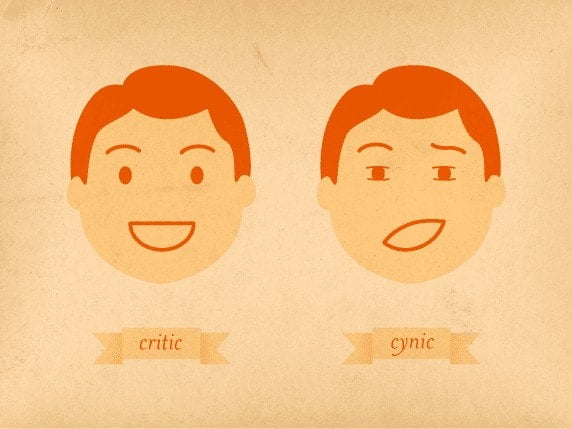
Criticism vs. Cynicism

Criticism vs Cynicism

Throughout our lives we face critique — feedback from others about our work and behavior. How do we tell what feedback to take to heart, and what to disregard?

Recently The 99 Percent featured an article about Criticism vs. Cynicism, which presents a lens through which to evaluate the responses we get from others. I thought it was well worth a read, especially if you’re involved in a creative craft.

>> Read: On Criticism, Cynicism & Sharpening Your Gut Instinct :: Tips :: The 99 Percent

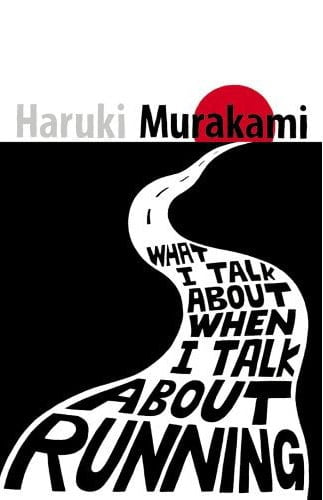
Haruki Murakami: Talent Is Nothing Without Focus and Endurance

“Symmetry” from Radiolab

In the spirit of their thought-provoking and funky radio show, Radiolab presents this short video about symmetry. Watch and you’ll understand. Very clever.

OpenIDEO: What global challenge do you think innovation leaders should work to solve right now?

I’m a fan of IDEO, the “design consulting” firm that’s made a name for itself with multidisciplinary approaches to problem solving. Their OpenIDEO site throws challenge prompts out to the net at-large. One of their current challenges is rather big (“What global challenge do you think innovation leaders should work to solve right now?“), but also provides a chance to create some good food for thought.

Check it out.

>> Link: OpenIDEO – What global challenge do you think innovation leaders should work to solve right now? – Inspiration

How great artists fought creative block

Typewriter with a blank page

The daunting stare of the blank page.

We’ve all been there: trying to come up with a great idea, or write a beautiful passage, or finish a project. And it seems that our brains cough up nothing but hot, dry air.

The good folks at BBC put together a nice look at how great artists–especially musicians–dealt with their creative block. In this case, it’s most appropriate if I just let the original article speak for itself.

>> Link: BBC News – How great artists have fought creative block

Fleeting Youth, Fading Creativity in Science

In the Wall Street Journal, Johah Lehrer explores the connections between youth and creativity in the sciences.

For one, he notes the demographic shift toward older scientists:

In 1980, the largest share of grants from the National Institutes of Health (NIH) went to scientists in their late 30s. By 2006 the curve had been shifted sharply to the right, with the highest proportion of grants going to scientists in their late 40s. This shift came largely at the expense of America’s youngest scientists. In 1980, researchers between the ages of 31 and 33 received nearly 10% of all grants; by 2006 they accounted for approximately 1%. And the trend shows no signs of abating: In 2007, the most recent year available, there were more grants to 70-year-old researchers than there were to researchers under the age of 30.

Where are all the young people? It’s an important question.

But an equally important question–and one that I feel is relevant to proposing ways to change the status quo:

Why are young physicists and poets more creative? [Dean Simonton, a psychologist at the University of California, Davis] argues that they benefit, at least in part, from their willingness to embrace novelty and surprise. Because they haven’t become “encultured,” or weighted down with too much conventional wisdom, they’re more willing to rebel against the status quo. After a few years in the academy, however, “creators start to repeat themselves, so that it becomes more of the same-old, same-old,” Mr. Simonton says.

As we think about how to reinvigorate the sciences, I think it’s important to consider the effects of “enculturing” on a larger social level, too. We see it in middle school, high schools, and universities. Standardization of education may play a significant part in creating this perverse effect. So might our collective attitudes about what education means in this country.

But beyond the ivory tower, we see “enculturing” in the working world. Business leaders and entrepreneurs fight against this very thing. Though one might argue that every new gizmo on the market isn’t “moving the world forward” in the way scientific discovery does, there’s something about the spirit of innovation that thrives in market-driven endeavors.

What lessons can science learn from the world of entrepreneurship, and vice-versa?

Link: Fleeting Youth, Fading Creativity in Science [WSJ.com]

Proudly powered by WordPress
Theme: Esquire by Matthew Buchanan.